
Great Safaris Final Trip Itinerary for Serengeti Sunsets & Safari Dreams
Prepared By: Guillaume Van Wyk on Jun 10, 2026
 Karen Coleman-Ostrov, CTA
Dream Vacation Specialist
855.469.2784 Toll-Free
480.646.4969 Direct
kcolemanostrov@dreamvacations.com
Quick Summary
Itinerary Detail
Day 1: Arrive in Kilimanjaro Airport, Tanzania. Receive a meet and greet with a private transfer to the hotel.
Wednesday Oct 13, 2027

Daily Summary
- Meet & Greet: Meet & Greet - Tanzania
- Land Transfers: Private transfer to the hotel
- City: Arusha
- Accommodation: Rivertrees Country Inn - Garden Room
- Meals: D
Meet & Greet - Tanzania
Your exciting adventure begins today, as you touch down in Tanzania. Upon arrival you will be meet and greet by our representative and assisted to your next service.
Private transfer to the hotel
Arusha
Arusha is Tanzania's gateway to the northern circuit of stellar national parks and the starting point of a memorable safari. Located below Mount Meru on the eastern edge of the eastern branch of the Great Rift Valley, Arusha City has a temperate climate. The city is close to the Serengeti National Park, the Ngorongoro Conservation Area, Lake Manyara National Park, Olduvai Gorge, Tarangire National Park, Mount Kilimanjaro, and Mount Meru in the Arusha National Park.
It's also a large, sprawling city with vibrant markets that sell everything from meat and fish to fabrics and electronics, curios and African art by local artists. They are crowded and busy but a great way to experience 'local' Africa. Arusha is also considered an international diplomatic hub. It is home to the East African Community, and is set to be the capital city of the proposed East African federation. Arusha is home to many industries and business sectors, including banking, manufacturing, and tourism.
Day 2: Drive to Arusha National Park for a game drive including a visit to Momella Lakes and Ngurdoto crater and a guided hike on the lower slopes of Mount Meru.
Thursday Oct 14, 2027

Daily Summary
- Land Transfers: Land transfer to Arusha National Park
- Activities: Arusha National Park
- Activities: Momella Lakes
- Activities: Ngurdoto Crater
- Accommodation: Rivertrees Country Inn - Garden Room
- Meals: B, L, D
Land transfer to Arusha National Park
Arusha National Park
Arusha National Park is one of the most interesting places in Northern Tanzania and famous for being a home to the second highest mountain in Tanzania, Mt Meru, as well as having the world’s largest population of giraffes. It harbors incredible wildlife species that cannot be viewed in other national parks in the northern circuit including vegetation types like the lush rainforest, savannah, alpine vegetation, and amazing wildlife like buffaloes, bushbucks, warthogs, zebra, red duikers, elephants, giraffe, leopards, hippos, primates like black and white colobus monkeys, vervet monkeys, blue monkeys and more. Birdlife is equally great with species like grey crowned crane, flamingos, African fish eagle, harlaubs turaco, secretary birds among others. The park has three distinct areas that are the Meru crater funneling the Jekukumia river in the west, Ngurdoto crated in the south-East and the shallow alkaline Momelle lakes with varying algae colors in the north-East.
Momella Lakes
The Momela lakes are located within the Arusha National Park, they are alkaline lakes whose shallow waters come from underground sources; on their bottom they grow many algae that many water birds that live on their shores feed on. The seven lakes are: Big Momela, Small Momela, El Kekhotoito, Kusare, Rishateni, Lekandiro and Tulusia.
Each lake has a source of spring water separated from the others and also has a different color ranging from green to turquoise; the reason for these different colors depends on different minerals contained in the individual lakes, in fact, even if they are not far one from the others, each of these lakes has a particular composition of minerals, that makes them all different from one another; there are also different algae that grow there, as well responsible for the different colors. These lakes are the perfect habitat for many aquatic birds, both resident and migrant, who are located in the park, such as the greater pink flamingos, the lesser pink flamingos, pelicans, Egyptian geese, guinea fowls, African fish eagles, African jacanas and many others.
Ngurdoto Crater
The Ngurdoto Crater is part of the Arusha National Park and is the caldera of an extinct volcano, that is sometimes called "little Ngorongoro" because, just like Ngorongoro, has become, over time, a sort of "reserve in the reserve". The caldera is shaped like a basin with very steep walls and covered with dense rainforest, it is 3 km wide and 400 meters deep; in its bottom covered with marshy grassland live buffalos, elephants, warthogs, some antelopes, monkeys, baboons, leopards and spotted hyenas; there are also many species of birds such as the head hammer, the spur-winged goose and herons. You cannot descend into the crater because one wants to preserve and protect its ecosystem; but you can walk along a circular route on the crater rim, where you can meet different observation points: on the Northern edge there are the lookout with the best views. From this elevated position you can see all over the park below and, on clear days, you can admire Mt Kilimanjaro.
The caldera is surrounded by a dense rainforest; here there is a higher possibility of the whole of Tanzania to spot, only on the trees, the rare white and black colobus. In the forest also live blue monkeys and baboons who, unlike the colobus, prefer to spend their days on the ground, taking refuge on trees only during the night or if there is any danger that threatens them. With a little luck you can even spot the timid and shy red duiker or tragelafo striatum or the kirk dik-diks; there are also many birds inhabiting this forest, such as the silver cheeks hornbill, bee-eaters and turacos. To the West of the crater lies the Small Serengeti or Ndogo Serengeti in Masai language, this is a prairie area; here you meet zebras, giraffes, warthogs, buffalos, red duikers and some antelopes.
Day 3: Enjoy a scenic drive to Tarangire National Park. Settle in at the lodge and go on an afternoon game drive.
Friday Oct 15, 2027

Daily Summary
- Land Transfers: Land Transfer from Arusha to Tarangire National Park
- Activities: Tarangire National Park
- Accommodation: Tarangire Sopa Lodge - Double Room
- Meals: B, L, D
Land Transfer from Arusha to Tarangire National Park
Tarangire National Park
Welcome to one of Africa's most underrated parks. Thanks to its proximity to Serengeti National Park and Ngorongoro Crater, Tarangire National Park is usually assigned only a day visit as part of a larger northern-circuit itinerary. Yet it deserves much more. It is a place where elephants dot the plains like cattle, and where lion roars and zebra barks fill the night.
But here the wildlife tells only half the story. Dominating the park's 2850 sq km, Tarangire's great stands of epic baobabs should be reason enough to visit. There are also sun-blistered termite mounds in abundance, as well as grassy savannah plains and vast swamps. And cleaving the park in two is the Tarangire River, its meandering course and (in some places) steep banks providing a dry-season lure for animals and thus many stirring wildlife encounters for visitors.
Day 4: Morning and afternoon game drives in Tarangire National Park - known for its large herds of elephants.
Saturday Oct 16, 2027

Daily Summary
- Game Drive: Game Drives in Tarangire National Park
- Accommodation: Tarangire Sopa Lodge - Double Room
- Meals: B, L, D
Game Drives in Tarangire National Park
Morning and afternoon game drives are conducted in a 4x4 customized game viewing vehicle with a professional driver - guide. Tarangire is an elephant enthusiast's paradise with up to 6,000 roaming the park. It is impossible to spend time in the park without encountering these iconic animals, feeding at the base of a baobab, strolling through the riverine forests or 'playing' in the mud of the marshlands. They are often present in a conglomeration of herds that could be 300 individuals - an incredible sight for even the most seasoned safari-goer.
Elephants aside, Tarangire is home to one of the greatest concentration of wildlife outside of the larger Serengeti ecosystem. They dry season influx of ungulates sees a profusion of wildebeest, zebra, gazelle, eland, hartebeest and buffalo assembled near the river, or around residual pools in the swamps. Such a conservation of prey serves to attract the attention of the park's various resident predators, particularly the ever-attended lions. The lions of the Silale Swamps are particularly renowned, not only for their marshy hunting techniques, but also for their habit of lounging in the boughs of trees. Leopards and cheetah are also present, and even the highly endangered African wildlife dog. Away from the wetter areas of the park, one might be fortunate enough to spot a gerenuk or fringe-eared oryx, making Taranigire one of the few places in Tanzania to see these arid species.
Day 5: Explore Lake Manyara for a game drive in search of the tree climbing lions.
Sunday Oct 17, 2027

Daily Summary
- Land Transfers: Land transfer from Tarangire National Park to Lake Manyara National Park
- Activities: Game drives in Lake Manyara National Park
- Land Transfers: Land transfer from Lake Manyara to Ngorongoro Conservation Area
- Accommodation: Ngorongoro Farm House - Standard Room
- Meals: B, L, D
Land transfer from Tarangire National Park to Lake Manyara National Park
Game drives in Lake Manyara National Park
Welcome to Lake Manyara National Park, famous for its tree climbing lions. One of the small parks in Tanzania with an exceptional diverse vegetation ranging from savannah to marsh to evergreen forest, a total of 11 ecosystems. The chance to see elephant families moving through the forest or Lake Manyara's famous population of tree-climbing lions are alone reason enough to come. Lake Manyara also provides the perfect introduction to Tanzania’s birdlife with more than 400 species have been recorded to date, which include pink-hued flamingos (by the thousands during migration), as well as other large water-birds such as pelicans, cormorants and storks. The dramatic western escarpment of the Rift Valley forms the park’s western border. To the east is the alkaline Lake Manyara, which covers one-third of the park but shrinks considerably in the dry season. During the rains, the lake hosts millions of flamingos and other bird life.
Land transfer from Lake Manyara to Ngorongoro Conservation Area
Day 6: Full day tour of the Ngorongoro crater including a picnic lunch - home to 25 000 animals and the BIG 5.
Monday Oct 18, 2027

Daily Summary
- Game Drive: Game drives in Ngorongoro Crater
- Activities: Ngorongoro Crater & Conservation Area
- Accommodation: Ngorongoro Farm House - Standard Room
- Meals: B, L, D
Game drives in Ngorongoro Crater
Game drives descend into the Ngorongoro Crater through a lush highland forest, with magnificent birdlife to be spotted among the different tree species. Once on the grassy crater floor, you may discover a large variety of grazing herbivores, up to 25,000 animals, as well as the predators that are attracted by this abundant supply of prey. Depending on the time of year, you may see huge flocks of pink flamingo around the shores of the shallow Lake Magadi, while the surrounding swamp is inhabited by hippo. Safari vehicles are closed, with glass windows and a pop-up roof.
The crater has formed its own ecosystem due to its enclosed nature, and is one place where you can certainly tick all the boxes. Lerai Forest comprised of yellow fever trees and Lake Magadi, a shallow soda lake. Roam to the east and you will find Gorigor Swamp and the Ngoitokitok Springs where happy pods of hippo can be found. The north of the Crater is where the bulk of the resident game resides thanks to the drier, open grasslands.
Ngorongoro Crater & Conservation Area
Ngorongoro Crater is an extinct volcanic caldera in the Eastern Great Rift Valley, northern Tanzania. The caldera measures between 10 and 12 miles across and has an area of 102 square miles. Its heavily forested rim rises 2,000 feet above the caldera’s floor to an elevation of 7,500 feet. Ngorongoro is thought to have formed about 2.5 million years ago from a large active volcano whose cone collapsed inward after a major eruption, leaving the present vast, unbroken caldera as its chief remnant.
The caldera’s floor is predominantly open grassland. It is home to a diverse array of animals including elephants, black rhinoceroses, leopards, buffalo, zebras, warthogs, gnu (wildebeests), Grant’s and Thomson’s gazelles, and the densest population of lions in the world. The local Masai people also graze their livestock in the crater. Lake Magadi, a shallow soda lake ringed by extinct volcanoes, is renowned as a habitat for great flocks of pink flamingos.
Day 7: Drive to Serengeti with game viewing enroute and arrive in time for lunch at the lodge. Relax, and go an afternoon game drive.
Tuesday Oct 19, 2027

Daily Summary
- Activities: Land transfer from Ngorongoro to Serengeti
- Activities: Serengeti National Park
- Accommodation: Kimarishe Serengeti Lodge - Standard Room
- Meals: B, L, D
Land transfer from Ngorongoro to Serengeti
Serengeti National Park
The Serengeti National Park is partly adjacent to the Kenya border and northwest of the adjoining Ngorongoro Conservation Area. It is best known for its huge herds of plains animals, especially wildebeest, gazelles, and zebras and it is the only place in Africa where vast land-animal migrations still take place. The park, an international tourist attraction, was added to the UNESCO World Heritage List in 1981.
The park was established in 1951 and covers 5,700 square miles with some of the best grassland range in Africa, as well as extensive acacia woodland savanna. With elevations ranging from 3,020 to 6,070 feet, the park extends 100 miles southeast from points near the shores of Lake Victoria and, in its eastern portion, 100 miles south from the Kenya-Tanzania border. During the wet season, from November to May, the herds graze in the southeastern plains within the park, with the calving season peaking around February when up to 8,000 calves are born daily for nearly two months. Early June one major group of animals moves west into the park’s woodland savanna and then north into the grasslands just beyond the Kenya-Tanzania border, an area known as the Masai Mara National Reserve, and another group migrates directly northward. The herds return to the Serengeti southeastern plains in November, at the end of the dry season.
Day 8: Morning and afternoon game drives exploring the vast plains of the Serengeti.
Wednesday Oct 20, 2027

Daily Summary
- Game Drive: Game Drives in the Serengeti National Park
- Accommodation: Kimarishe Serengeti Lodge - Standard Room
- Meals: B, L, D
Game Drives in the Serengeti National Park
Morning and afternoon game drives in and over the vast plains of the Serengeti. Serengeti National Park is a World Heritage Site teeming with wildlife: over 2 million ungulates, 4000 lions, 1000 leopard, 550 cheetahs and some 500 bird species inhabit an area close to 15,000 square kilometers in size. Dotted with trees and kopjes from which majestic lions control their kingdom; gaze upon the Great Migration in awe or find an elusive leopard in a riverine forest. The biological diversity of the park is very high with at least four globally threatened or endangered animal species: black rhinoceros, elephant, wild dog, and cheetah.
Serengeti National Park is at the heart the larger Serengeti ecosystem, which is defined by the area covered by the annual migration. The property is contiguous with Ngorongoro Conservation Unit, an area of 528,000ha declared a World Heritage Site in 1979. The entire ecosystem also includes the Maswa Game Reserve in the south, Ikorongo Game Reserves in the east, Maasai Mara National Reserve in Kenya (1,672km2) to the north, and Loliondo Game Controlled Area in the west. This entire ecosystem is intact and no barriers hamper the migration. Serengeti National Park is sufficiently large and intact to ensure the survival and vigour of all the species contained therein, if maintained in its present state but does not, by itself, ensure the protection of the entire ecosystem.
Day 9: Optional hot air balloon safari including a bush breakfast followed by morning and afternoon game drives.
Thursday Oct 21, 2027

Daily Summary
- Activities: Hot Air Balloon safari over the Serengeti
- Activities: Serengeti National Park
- Accommodation: Kimarishe Serengeti Lodge - Standard Room
- Meals: B, L, D
Hot Air Balloon safari over the Serengeti
In the crisp air of dawn, the passengers watch the crew partially inflates the balloon with enormous fans before the gas burners are ignited to fill the balloon with hot air. The crew directs clients how to get into the basket moments before take-off. The balloons lift off just before sunrise when the breeze on the plains is still cold. Once airborne, the balloon is blown by the prevailing winds across the broad landscape. Apart from the hiss of the burners, the flight above the plains is magically silent. The pilot controls the height of the craft by regulating the flow of hot air into the balloon. Sometimes the balloon will descend over the plains for a close up view of the wildlife; on other occasions, it rises to clear a tree canopy and rise over the riverine forest. This is an experience never to be forgotten. Enjoy the rest of the day on safari exploring this amazing park.
Serengeti National Park
The Serengeti National Park is partly adjacent to the Kenya border and northwest of the adjoining Ngorongoro Conservation Area. It is best known for its huge herds of plains animals, especially wildebeest, gazelles, and zebras and it is the only place in Africa where vast land-animal migrations still take place. The park, an international tourist attraction, was added to the UNESCO World Heritage List in 1981.
The park was established in 1951 and covers 5,700 square miles with some of the best grassland range in Africa, as well as extensive acacia woodland savanna. With elevations ranging from 3,020 to 6,070 feet, the park extends 100 miles southeast from points near the shores of Lake Victoria and, in its eastern portion, 100 miles south from the Kenya-Tanzania border. During the wet season, from November to May, the herds graze in the southeastern plains within the park, with the calving season peaking around February when up to 8,000 calves are born daily for nearly two months. Early June one major group of animals moves west into the park’s woodland savanna and then north into the grasslands just beyond the Kenya-Tanzania border, an area known as the Masai Mara National Reserve, and another group migrates directly northward. The herds return to the Serengeti southeastern plains in November, at the end of the dry season.
Day 10: Fly to Zanzibar. You will be met on arrival with a private transfer to the hotel for your 3 night stay.
Friday Oct 22, 2027
Daily Summary
- Internal Flights: Internal flight from Serengeti to Zanzibar
- Meet & Greet: Meet & Greet - Zanzibar
- Land Transfers: Private transfer to the hotel
- City: Zanzibar
- Accommodation: Breezes Beach Club & Spa - Deluxe Room
- Meals: B, D
*** Flight from the Serengeti depart 11am and arrive 2:30pm in Zanzibar (flight included)
Internal flight from Serengeti to Zanzibar
Meet & Greet - Zanzibar
Private transfer to the hotel
Zanzibar
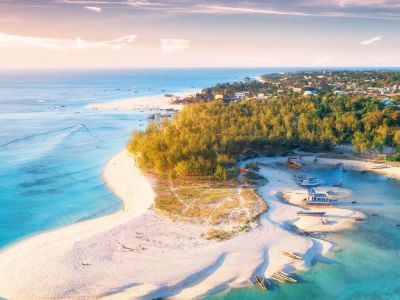
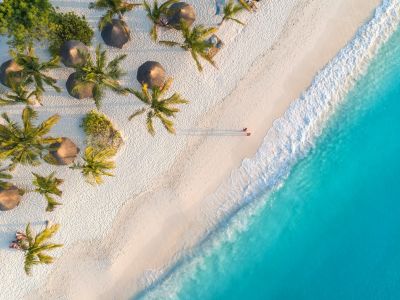
The landscapes of the Zanzibar coastline, like from the best advertising postcards, makes Zanzibar a famous beach destination. Tourists are warmly welcomed with a high level of service. One of the many reasons why people enjoy Zanzibar is because of the wide and white beaches and warm water of the Indian Ocean, and serenity that reigns around. There is the popular beach of the disappearing island of Nakupenda - it appears only at low tide in the morning. Stone Town is a world-famous landmark in Zanzibar and a UNESCO World Heritage Site. Unique monuments of antiquity have been preserved on its territory. There are many other activities to choose from like the spice tour, diving, snorkeling, boating etc. Zanzibar is a great beach destinations.
Days 11 - 12: Enjoy two full days at leisure in Zanzibar...
Saturday Oct 23, 2027-Sunday Oct 24, 2027
Daily Summary
- Activities: Zanzibar activities
- Accommodation: Breezes Beach Club & Spa - Deluxe Room
- Meals: B, D
Zanzibar activities
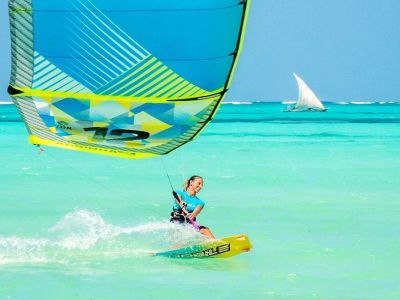
These days are at your leisure, and Zanzibar has an array of activities to explore at your own time. Guests can book various trips on the island, such as visiting Stone Town, following in the footsteps of Freddy Mercury, visiting the Jozani forest to see the Zanzibar Red Colobus Monkey and sailing on a dhow to find dolphins. Other excursions include the Princess Salme Trip, the Prison Island Trip to Changuu Island with its ancient giant tortoises and the Sand Bank Picnic. The Spice Tour shows why Zanzibar was known as the Spice Island, while the Sultan Panorama excursion explores the history of the Sultans. Take the Swahili Cultural Trip to find out more about Swahili culture or try the Safari Blue for snorkeling and a seafood barbeque. End the day with our Sunset Cruise, sipping jungle juice or cocktails and snacking on canapés as the boat sails along the coast.
Stone Town Trip: Follow in the footsteps of the sultans and explorers down the winding streets of Stone Town. Your guide will tell you about the events that shaped Zanzibar, leading you through the buildings where everything happened, including the former slave market, the Anglican cathedral, the House of Wonders, the Sultan’s Palace museum and the old Arab Fort. You will also visit modern Zanzibar sites, including the fish and vegetable markets.
Jozani Forest Tour: The Jozani forest is home to a number of endemic species, including the Zanzibar Red Colobus Monkey, the Zanzibar leopard, which is critically endangered and possibly extinct and the recently described Zanzibar servaline genet. Your guide will take you on a nature trail, lined with eucalyptus and mahogany trees and explain the medicinal properties of various plants and tell you about the animals, birds and reptiles that make their home in the various habitats of the tropical rainforest.
Kizimkazi Dolphin Adventure: Guests travel about an hour to Kizimkazi on Zanzibar’s south coast, where they board a traditional ocean-going dhow and set sail on the Indian Ocean in search of dolphins. The dhow can pass as close as 10 to 20 meters from the dolphins and guests have sometimes been lucky enough to swim and snorkel with these beautiful animals. The boat trip takes approximately two hours and includes snorkeling on the pristine coral reef and lunch.
Princess Salme Trip: Princess Salme was an Arabian princess who sent shockwaves through Zanzibar when she taught herself to write, conspired to overthrow her brother, fell pregnant and eloped to Germany with a young merchant. On this trip guests follow her life from Mtoni Marine, where she was born, to Marhubi Palace which was built by Sultan Barghash, Salme’s brother. The tour ends at the Palace Museum, where a room has been dedicated to Salme’s life and writings.
Prison Island Trip: Prison Island, also known as Changuu Island, gets its name from the prison built to keep citizens from Zanzibar in isolation. Previously owned by an Arabian slave trader to house rebellious slaves, the prison was never used and the island is now a tortoise sanctuary. Prison ruins can still be seen on the island and a hotel has also been built there. Visitors can watch giant tortoises shuffle through the trees and are probably over 100 years old.
Sand Bank Picnic: Guests on this trip leave on a dhow from Serena Inn for Prison Island. After exploring the island, they are taken on a guided snorkelling trip to see the stunning array of coloured corals and tropical fish. Afterwards, they sail away to a sand bank with wonderful bird life, where lunch is served. After lunch, it’s time to relax on the beach or explore the underwater life surrounding the sandbank. The dhow sails leisurely back to Stone Town arriving at approximately 15h30.
Spice Tour: Zanzibar was known as the Spice Island, exporting cloves, vanilla, nutmeg and cardamom across the world. Nowadays, the plantations are a tribute to the island’s past. On this tour you get the opportunity to walk through the spice farms with your guide and touch, smell and taste different spices and tropical fruits. You also get the chance to learn about their properties, origin and use as medicines and additives to food and drink.
Sultan Panorama: This full day excursion starts in Stone Town and covers the history of the Sultans, the slave trade and invasions that shaped Zanzibar’s history. Guests visit Darajani Market to experience city life with all the hustle and bustle, sounds and aromas. Guests are then taken to a spice farm where they get the opportunity to taste seasonal spices and fruits and learn about their properties and use.
Sunset Cruise: In the days of slave trading, slaves were exported from the Mangapwani coast over thousands of miles to faraway lands and continents. Guests can explore the coastline, fringed with coconut palm trees and enjoy the most breath-taking sunsets while sipping on jungle juice or cocktails and eating canapés as the boat sails along the coast before it returns to the Stone Town. (Seasonal)
*** All excursions can be booked and paid directly at the resort’s tours desk (not included in tour price)
Day 13: After breakfast transfer to the Airport for your departure flight home.
Monday Oct 25, 2027
Daily Summary
- Land Transfers: Private transfer to the Airport
- International Flights: Departure flight from Zanzibar Airport
- Meals: B
Private transfer to the Airport
Departure flight from Zanzibar Airport
After breakfast, transfer to the airport for your flight back home. Bid farewell to Africa, for now until your next Safari !
Accommodation
Rivertrees Country Inn
Room Type: Garden Room
Dates: Oct 13, 2027 - Oct 14, 2027
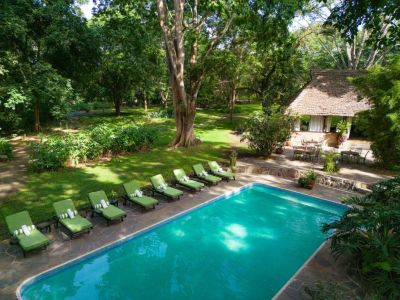
Set in Northern Tanzania just outside the bustling safari town of Arusha, Rivertrees looks out toward Mt Kilimanjaro, and is perfectly situated for exploring the abundant nature reserves that this region is home to. The inn is a charming country estate that was once an old coffee farm, and still retains the nostalgic air of a well-loved homestead. Sprawling ten acres of fertile greenery, the grounds are a natural extension of Mt Meru’s sloping foothills, and offer a sanctuary for the birds and wildlife indigenous to the area. Elegantly rustic cottages are dotted along the river and in thickets of tall trees, while lush lawns and birdsong make for a peaceful and picturesque setting. Set in the heart of an area rich in nature reserves, montane forests and vibrant village culture, the scope for exploration is endless. The restaurant concocts tasty meals of garden-fresh ingredients and old family recipes, as well as oven-fired pizzas and the best of the region’s locally grown coffees. Delicious candle-lit dinners are served by the warmth of the fireplace, or under the stars and the watchful eyes of resident owls. Rivertrees combines unpretentious comfort with subtle accents of style to create a timeless pause in a traveler’s journey, and a sense of warmth and genuine welcome.

Tarangire Sopa Lodge
Room Type: Double Room
Dates: Oct 15, 2027 - Oct 16, 2027
Built to blend in with the vastness of its surroundings, Tarangire Sopa Lodge lies hidden among the kopjes, ancient baobab and grasses of the Tarangire National Park - home to the greatest concentration of elephants in Africa. Many can be seen around the lodge, allowing visitors a close encounter. Built on different levels, the main public area building offers an extremely cool respite from the outdoor heat as soon as you step into the reception. With a perfumed towel and a chilled welcome drink in hand, you suddenly become aware of the sheer size of the lobby with its glistening marble floors, colourful hand-woven carpets, and an incredibly high roof. From here a short flight of steps takes you up a level and into the lounge and bar with floor to ceiling windows, an outdoor terrace where you can enjoy an evening sundowner and, later perhaps, a game of pool in the area behind the bar.
On the other side of the reception lobby is our coffee shop where you can enjoy one of a wide range of Tanzanian highland brews together with one of our freshly baked pastries, while adjacent to this area a flight of steps takes you down into the dining room for a leisurely – and always simply-to-die-for – meal beneath an intricately painted mural painted onto a high gable at one end of the room. Even the floor is a work of art with its multi-coloured timbers and copper nails. However, if you relish the great outdoors, the restaurant has a terrace running along one side of its entire length so you can enjoy your breakfast with a view over the park’s tree-studded, grassy plains. Weather permitting, lunch is always served at the lodge’s lowest level and beside the swimming pool with its central island and bar beside a dry river bed which fills up during the rainy seasons. As for dinner, the dining room has an enormous outdoor patio where we serve dinner every other night, and this experience beneath Africa’s star filled sky is quite simply one you will never forget.

Ngorongoro Farm House
Room Type: Standard Room
Dates: Oct 17, 2027 - Oct 18, 2027
Farm House Valley was built on a 500 acre plantation with a main central building with a restaurant and leisure area. Every afternoon a fire is lit and drinks and snacks are available for guests whilst they share their experiences of the day and compare the different animals they have seen in the park. The whole hotel has been conceived to offer the maximum comfort and a touch of luxury in an impressive scene. The ideal place to relax, have a swim in the pool, go jogging or let yourself be tampered after a day of adventures.
Chalet type bedrooms situated at ground level with a private terrace or balcony. Overlooking the gardens and/or the coffee plantation. Ample and comfortable. Rooms with a double bed or two single beds. The rooms have bathroom with a shower. The family room consist in two rooms interconnected.
Kimarishe Serengeti Lodge
Room Type: Standard Room
Dates: Oct 19, 2027 - Oct 21, 2027
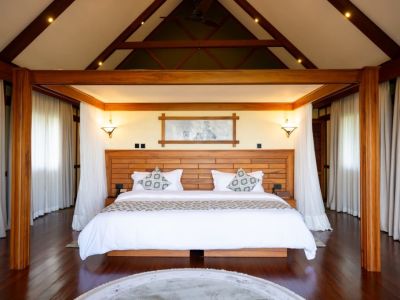
Kimarishe Serengeti Lodge is located in the prime game viewing area in Central Serengeti, about 24 kilometres from Seronera airstrip. The lodge sits on Kimarishe Hill, commanding stunning views over the Serengeti plains. Kimarishe Serengeti has a total of 26 guest rooms, comprising of 20 Standard Rooms, and 2 Family Suites with three rooms each, all with a balcony and great views over the Serengeti. The rooms are large with bathrooms en suite including solar heated indoor & outdoor showers (except 2 middle rooms in the Family Suites with no outdoor shower) and can accommodate guests staying in double, twin, or triple room configuration. The rooms are furnished with large beds with mosquito netting, two sofa chairs with coffee table, wardrobe, dressing table, a writing desk & chair, and a luggage rack. Other amenities include an in-room safe, ceiling fan, unlimited WiFi access, fridge, tea & coffee making station, bathrobe & slippers, and hairdryer. The public area houses the lounge, bar and restaurant, with spectacular views of the Serengeti plains. With the exception of a few guest rooms, all lodge areas are wheelchair-accessible. Other facilities include laundry, an infinity swimming pool, a kid pool, gym, spa, and a gift shop. This is an eco-friendly lodge using solar power and standby generator.
Breezes Beach Club & Spa
Room Type: Deluxe Room
Dates: Oct 22, 2027 - Oct 24, 2027
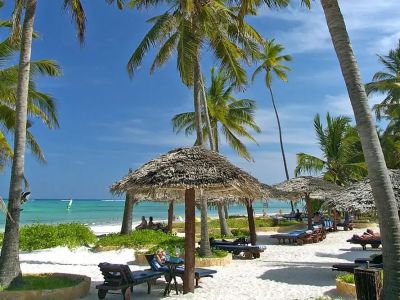
Breezes Beach Club & Spa Zanzibar is an ideal choice for those in search of a romantic getaway. Famous for its attention to detail, intimate and private dining, its beautiful Zanzibari decor with stunning carving, glistening brass and rich fabrics creates an elegant and unique atmosphere. Breezes features the award winning Frangipani Spa. Breezes lies along a pristine and untouched beach on the South East coast of Zanzibar island, which is the most quiet and untouched part of the Island chosen by the reputable Conde Nast Traveler magazine as one of the top 30 Island beaches in the world. For centuries the island of Zanzibar has evoked a mystical and magical dream. There is no better place to experience and enjoy the fantastic setting, beautiful beach and our friendly staff.
Cost Includes
• Accommodation and meals as specified in the itinerary
• Ground transportation in a 6-seater 4x4 safari vehicle with an English-speaking driver-guide
• Game drives as indicated in the itinerary
• Park entrance fees
• Meet-and-greet services
• Tourism Development Levy
• VAT on ground transport, crater service fee, and park entry fees
• Bottled drinking water during game drives
• Internal flight from Serengeti to Zanzibar, including taxes
Cost Excludes
• Visas, inoculations and personal insurance
• International flights
• Departure taxes except where indicated
• Optional activities and excursions
• Drinks, tips, laundry and other personal expenses.
• Medical, Travel and Baggage Insurance
***Please note that all quotations are based on the current rates of park fees, VAT and other government taxes, should any of these be increased or a new tax be introduced, these tax increases will be added on even if the safari has already been paid for.

78060 Calle Estado Suite 7,
La Quinta, CA 92253
P 800.409.7755 | F 818.459.6999
info@greatsafaris.com| www.greatsafaris.com
CST# 2163276-50
THANK YOU FOR TRAVELING WITH GREAT SAFARIS